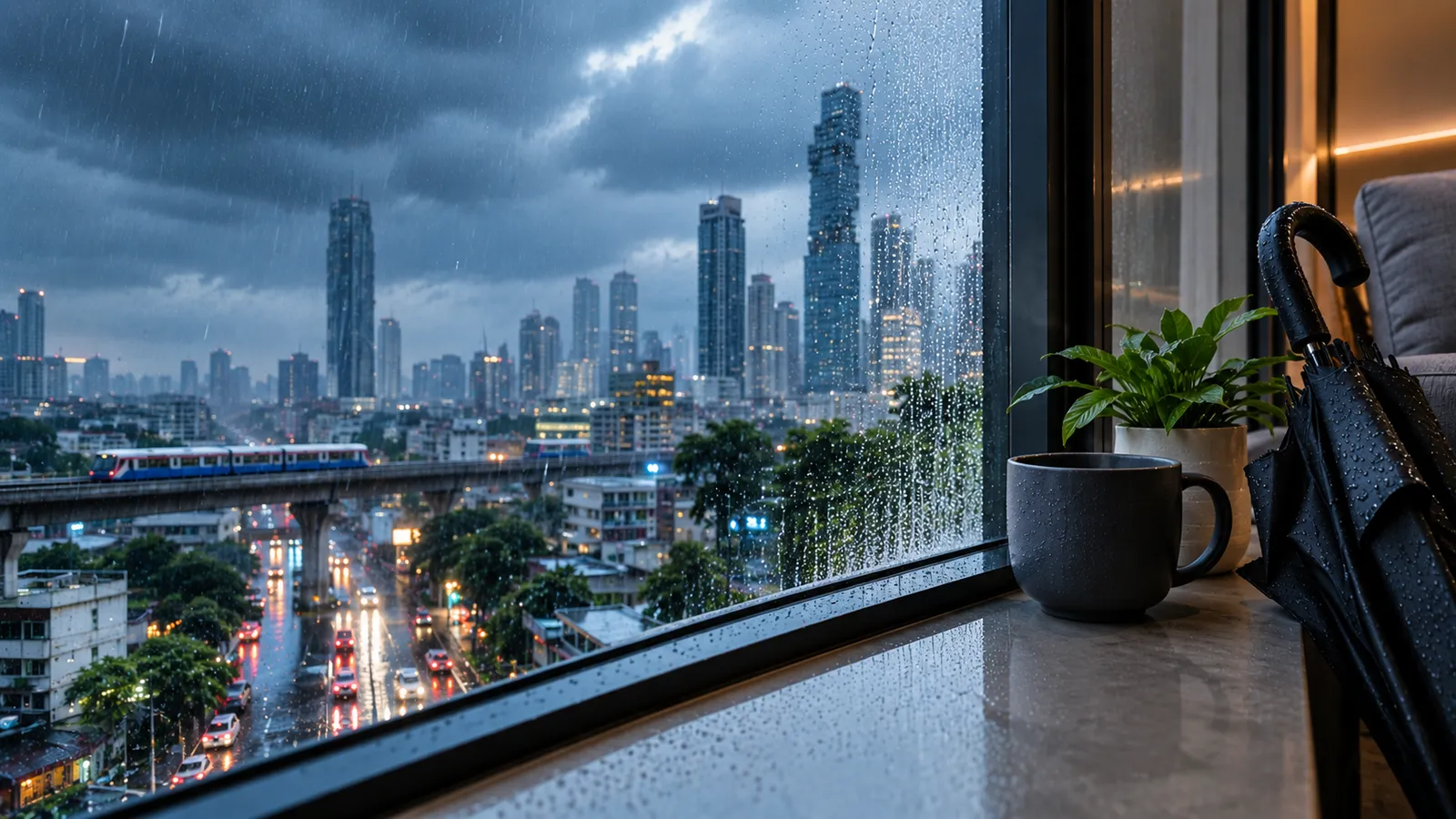
On a September afternoon, the sky over Bangkok turns grey in minutes. Rain drums against the balcony glass, and the streets below begin to fill. For many of us, it's the moment to stay in, make something warm to drink, and let the city slow down.
Behind that calm, weeks of heavy rain are quietly testing every building, from the drains on the rooftop to the seal on each balcony door. The good news: most damage is preventable when residents and property management prepare together.
That's why this guide is written for both. A dry, comfortable home in the rainy season is something everyone in the building shares, and everyone helps protect.
Why September rain matters for condos
September is often the wettest month of the year in Bangkok. Condos carry risks a house doesn't: balconies that take rain directly, AC drain pipes linked to shared systems, exterior wall joints on high-rise buildings, and neighbours above and below. A leak from one point can reach several units at once.
5 warning signs worth noticing
Stains on the ceiling or bubbling paint
These usually point to a leak from the unit above or the building exterior. The earlier you catch it, the easier the fix.
A musty smell or mould spots
Found in wardrobes, corners, or under the sink, they are the first signs of hidden moisture.
Water seeping under the balcony door
This means the balcony drain is blocked or the door seal has worn out.
A dripping AC unit
A blocked AC drain pipe is one of the most common causes of indoor leaks in condos.
Flickering lights or a tripping breaker during rain
Moisture may have reached the electrical system. Don't fix it yourself. Contact property management or a technician right away.
For residents: caring for your home
Clear the balcony drain
Leaves and dust build up faster than you think, and a small blockage can let water in within minutes.
Check door and window seals
If you spot water marks or gaps, report them before the next storm.
Service the AC and check the drain pipe
It prevents drips and keeps indoor humidity down.
Keep humidity in check
Run the AC on dry mode, open wardrobes for airflow, and place moisture absorbers in closets and shoe cabinets.
Empty standing water
Plant saucers and balcony corners breed mosquitoes, and September is peak dengue season.
Protect against power surges
Use surge protectors and unplug during sustained lightning.
Move your car up
If the building has basement parking, park on a higher level when heavy rain is forecast.
Photograph and report problems early
Dated photos speed up repairs and protect both tenant and owner.
For property management: caring for the whole building
Inspect and clear common drains
On the roof, rooftop, and shared areas, before and after major storms.
Test water pumps and backup generators
Especially for basements and car parks.
Prepare sandbags and flood barriers
For car park entrances and low-lying areas.
Send warnings ahead of time
Let residents know when heavy rain is forecast, with clear guidance on what to do.
Set up an after-hours contact
Residents should know exactly who to reach when a leak starts at night.
Track every repair to completion
Then share a summary with the committee once the heavy rains pass.
Better together: what makes a building rain-ready
Buildings that come through the rainy season well don't just have good systems. They have good communication. Residents who report early and property management teams who respond quickly make the strongest partnership. When both sides see the same information, a small problem never gets the chance to grow.
Frequently asked questions (FAQ)
Who is responsible for a leak from the unit above?
It depends on the source. If it comes from inside the unit above, such as its pipes or AC, that unit's owner is usually responsible. If it comes from common property or the exterior wall, it usually falls to property management. Check your building's regulations as well.
As a tenant, who should I tell first about a leak?
Tell the owner or unit manager right away, with photos. If it's urgent or involves common areas, notify property management at the same time.
Does insurance cover rain damage?
It depends on the policy. Building insurance usually covers common property, while belongings inside the unit may need the owner's or tenant's own cover.
QasaLiving: helping the whole building weather the season together
In the rainy season, speed is everything. QasaLiving connects residents, owners, and property management in one platform, from the first report to the finished repair, so everyone sees the same information in real time.
| What you need in the rainy season | How QasaLiving delivers it |
|---|---|
| Fast repair reports with proof | Resident app: report maintenance with photos and track every update |
| Timely warnings | Notices from property management sent straight to every resident in the app |
| Nothing dropped | Dashboards tracking every repair, with reports ready for the committee |
| One communication channel | Notices, complaints, and alerts in a single in-app channel |
- Fast repair reports with proof
- Resident app: report maintenance with photos and track every update
- Timely warnings
- Notices from property management sent straight to every resident in the app
- Nothing dropped
- Dashboards tracking every repair, with reports ready for the committee
- One communication channel
- Notices, complaints, and alerts in a single in-app channel